Iraj Jannatie Ataie
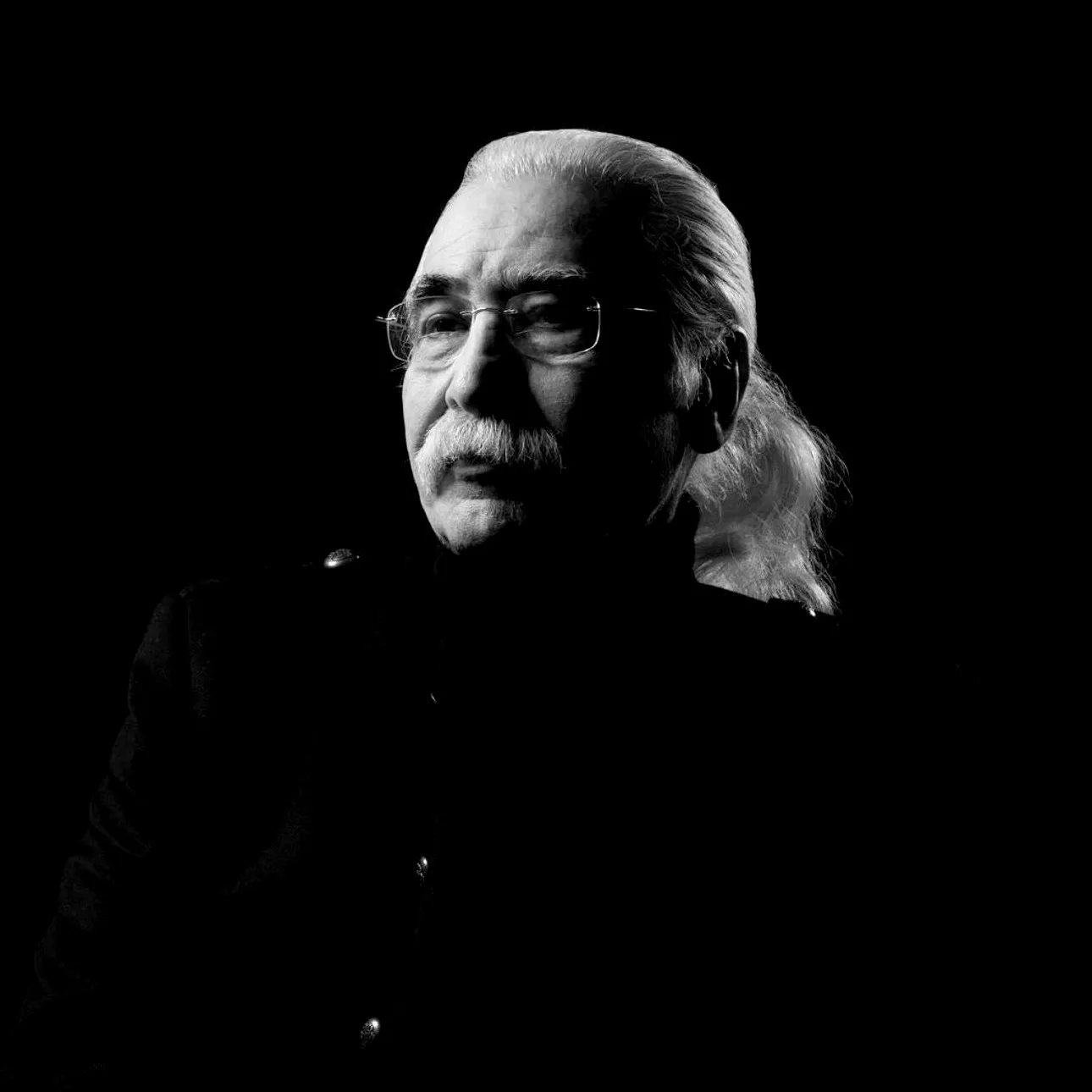
Iraj Jannatie Ataie wrote the words that a generation of Persian voices carried out of the country. Born in Mashhad, resident in London since 1978, he has held the same position for more than half a century: at the desk, listening to the language.
Mashhad, 1947
He was born on 9 January 1947 in Mashhad, in north-eastern Iran, a city where Persian had been recited and copied out for a thousand years. Unconfirmed
The 1970s
By the early seventies his lyrics were being sung by the best-known voices in Persian music. In 1972 he received the Forough Farrokhzad Prize. Unconfirmed
What mattered about the recognition was where it placed him. The song lyric was not a margin of Persian literature. It was part of it.
He wrote with an ease that concealed the discipline behind it. Short lyrics that opened into long feelings. Plain words that turned, after a single line, into metaphor.
Exile, 1978 — London
He left Iran in 1978 and has lived in London ever since. Unconfirmed
Exile did not quiet the work. The absent street, the remembered light, a language carried abroad on cassette — these became the subject, and he has written from one shore to the other for more than forty years.
The songbook
His songs have been recorded by the singers who, for many listeners, define Persian song: Dariush, Googoosh, Ebi. Unconfirmed
Some titles left the page long ago and entered the common memory of Persian speakers. Unconfirmed
The record of each work — year, composer, performer, album — is held in the register.
The playwright and the poet
He has written for the stage and published volumes of poetry. Unconfirmed
The temperament is the same in every form: an ear for how Persian actually moves in the mouth, and a refusal to mistake plainness for simplicity.
In his own words
Unconfirmed